One bad tile decision rarely fails in the showroom. It fails later - when shade variation derails a reorder, edge inconsistency slows installation, or breakage rates eat into project margin. If you are sourcing at scale, knowing how to tell good quality porcelain tile is not just a product question. It is a purchasing, inventory, and reputation question.
For distributors, importers, and project buyers, quality has to be evaluated on two levels. The first is the tile itself - density, flatness, finish, dimensional accuracy, and durability. The second is the supplier’s ability to reproduce that quality across batches and over time. A tile can look premium in a sample board and still become a problem line if production stability is weak.
The fastest way to misread porcelain quality is to judge it only by surface appearance. A polished face, trendy pattern, or sharp render can attract attention, but serious buyers need to look deeper. Good porcelain tile combines visual value with manufacturing discipline.
Start with body density. Porcelain is defined by low water absorption, but not all porcelain in the market performs at the same level. A dense, well-fired tile generally feels solid, not chalky or brittle at the edges. When you inspect a cut edge or back body, look for a compact structure rather than a porous, uneven interior. If the body appears loose or overly granular, that is a warning sign for strength and long-term durability.
Dimensional consistency matters just as much. Tiles that vary too much in size or thickness create installation headaches, especially on larger floors or walls where joint alignment becomes obvious. Ask for actual caliber and thickness tolerances, not just nominal size. Good factories control these tightly. In project work, a few millimeters of inconsistency across batches can turn a clean layout into a claim.
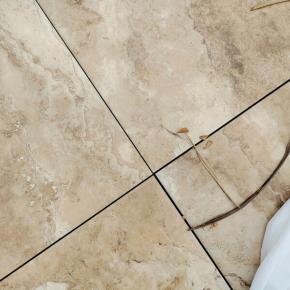
Flatness is another point buyers often underestimate. Warpage affects both appearance and installation speed. Large-format products demand especially strict control here because even small deformation becomes visible under lighting and across long spans. If the tile rocks on a flat surface or shows bowing beyond acceptable tolerance, the problem does not get better at the jobsite.
Glaze and decoration quality separate premium collections from commodity lines very quickly. On a good porcelain tile, the surface design should be clear, balanced, and intentional. Pattern depth, texture realism, and print registration should hold up under close inspection, not just from three feet away.
For glazed porcelain, inspect the finish under direct light. Good quality surfaces should show even application, controlled sheen, and no random pinholes, dull spots, or contamination. In wood-look, stone-look, or concrete-look collections, repeated faces are another commercial issue. Heavy pattern repetition makes an installation look cheaper, which reduces design differentiation for distributors and weakens the end user’s perceived value.
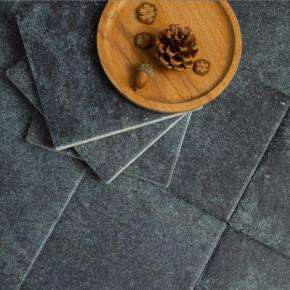
Edge finishing also says a lot about production quality. On non-rectified rustic porcelain, edge character should feel deliberate and consistent with the style, not rough because of poor process control. On rectified lines or panels, edge precision becomes critical because installers and specifiers expect tight, clean joints. Premium positioning collapses quickly when the edge finish looks careless.
Slip resistance and wear performance must match application, not marketing language. A beautiful tile with the wrong surface performance for hospitality, bathroom, outdoor, or high-traffic commercial use is not a high-quality choice in practice. Quality means fitness for the intended environment, backed by real technical data.
If you want a reliable way to assess how to tell good quality porcelain tile, ask for the technical sheet and read it like a buyer, not a designer. The most relevant data usually includes water absorption, breaking strength, modulus of rupture, abrasion resistance where applicable, stain resistance, chemical resistance, slip rating, and frost resistance if the tile will be used in exposed conditions.
The key is not collecting specifications for their own sake. It is checking whether the product’s technical profile aligns with the market and application you serve. Residential wall tile, a high-traffic lobby floor, a commercial bathroom, and a facade panel do not require the same performance package.
For wholesale and project sourcing, certification and test reporting should also be current and traceable. If a supplier hesitates to provide clear documentation, or if the data looks generic across unrelated product lines, treat that carefully. Reliable manufacturers understand that serious buyers need evidence, not broad promises.
There is also a practical side to testing that spec sheets do not fully capture. Sample handling still matters. Check for chipped corners, body integrity, edge break behavior, and consistency from piece to piece. If possible, review tiles from more than one carton. A controlled top layer sample is easy to present. Batch consistency is harder to fake.
This is where many importers and distributors lose margin. They identify an attractive tile, confirm acceptable quality on first order, and assume the rest will follow. Then the second or third shipment arrives with shade drift, sizing variation, packaging weakness, or unexpected discontinuation.
A good quality porcelain tile line is not just one successful batch. It is a repeatable program. That means stable raw material sourcing, disciplined kiln control, reliable glazing processes, and a manufacturer that manages replenishment with continuity in mind. For distributors building a local market around a collection, consistency is part of the product itself.
Ask direct questions about batch control, shade management, reorder availability, and production planning. If a supplier treats replenishment as an afterthought, the risk moves to you. This is especially serious for project buyers who may need matching material for phased deliveries, punch-list replacements, or future maintenance stock.
Packaging quality belongs in this discussion too. Weak cartons, poor palletizing, and inconsistent labeling create avoidable freight damage and warehouse confusion. A premium tile should arrive with export-ready packing that protects both product and handling efficiency. The best-looking tile in the catalog still becomes expensive if too much of it breaks before installation.
The most reliable suppliers do not hide behind broad claims like premium, first choice, or high grade. They can explain why a product performs the way it does, where it fits best, and what trade-offs exist.
For example, ultra-thin large-format porcelain panels offer strong design impact and lower dead load, but they require tighter handling and installation discipline than standard small-format floor tile. Rustic non-rectified porcelain may offer warmth, texture, and better design separation in the market, but it should be evaluated within the intended aesthetic standard rather than against rectified edge expectations. Good suppliers help buyers make those distinctions early.
It also helps to assess how the factory discusses defects and tolerances. Every industrial product has acceptable variation ranges. The issue is whether the supplier defines them clearly, controls them consistently, and responds responsibly when something falls outside target. A manufacturer with real process discipline usually speaks in specifics.
This is one reason many international buyers prefer working with sourcing partners or manufacturers that understand both design positioning and operational continuity. Companies like YUPURONG compete on that combination because commercial buyers do not just need attractive tile. They need a line they can reorder, specify, and build margin around.
If pricing is dramatically below the category without a clear reason, inspect more closely. Cost advantage can come from scale and efficiency, but it can also come from weaker raw materials, lower firing standards, thin glaze application, looser sorting, or unstable quality control.
Be cautious when samples look strong but production details are vague. Watch for missing batch information, inconsistent carton labels, unclear origin of test reports, and a catalog full of trend-driven designs with no obvious continuity plan. Another red flag is when a supplier cannot tell you whether the product is suitable for residential floor, commercial floor, wall, wet area, or exterior conditions without checking with multiple people.
Finally, pay attention to how problems are handled in pre-sale discussions. If communication is slow, technical answers are shallow, or commitments around lead time and replenishment feel improvised, those issues usually become worse after deposit and shipment.
Quality in porcelain tile is never just about one beautiful surface. It is the combination of technical integrity, visual control, and supply reliability that protects your project, your customer relationship, and your margin. The smartest buyers do not ask only whether the tile looks good. They ask whether it will still perform, match, and ship the way it should when the next order matters even more.
#porcelain tile quality inspection#large format porcelain sourcing#tile batch consistency control#commercial porcelain tile buying guide#importer tile quality checklist#glazed porcelain tile specification
Contact: Mr. Michael Ho
Phone: +8619257568267
E-mail: michael@yupurong.com
Whatsapp:+8613702912165
Add: 3rd Floor, Block 1, No. 286 Hefu Road, Hecheng, Gaoming, Foshan 528500, China
We chat